

The Language of Craft — Ambi, Bale, Dor, Palla
If you’ve ever walked into a shop that offers Kashmiri shawls, you’ll notice something quickly—people here use a lot of special words like, Ambi, Bale, Dor, Palla and more. Each one comes from years of craft and tradition, and they help explain what makes every shawl unique.
At KCS Kashmir Shawl Emporium, where shawls have been crafted and curated since 1950, these words move from the artisan’s tongue to the customer’s hands — and often need a little translation.
Here’s a clear breakdown of the terms from Aftaab to Zati
Aaftaab
Aaftaab means sun, but not the way we hear it in weather reports. In shawl-making, Aaftaab refers to a radiant circular motif, shaped like a rising sun. Some are bold and luminous, stitched in glowing saffrons and reds; others are soft, pale, almost whispering their pattern into the fabric.
Aaftaab motifs often sit at the corners of a shawl, almost like blessings placed quietly on four sides.
Feature: Aaftab Kalamkari Shawl – Multi

Ambi
Ambi is the heart of Kashmiri design — the beloved paisley. It curls, flows, and bends like a leaf caught mid-dance. Some ambis are tall and noble, some tiny and scattered like petals after a storm. Whether embroidered in Sozni, Ari, or woven in Kani, the ambi is the shape you’ll see again and again in Kashmir’s textile heritage.
Feature: Ambi Jama Kalamkari Shawl

Aksi
Aksi comes from the word “reflection.” In the world of shawls, it usually refers to reversible designs, where both sides are finished beautifully — like two personalities in one piece.
An Aksi shawl feels a bit like holding a secret: whichever side you choose to show the world, there’s another equally stunning side waiting underneath.
Feature: Chunri Booti Aksi Reversible Pashmina Shawl – Black, Ecru, Teal
Ari
The term Ari refers to a style of embroidery rather than a type of shawl. Ari work is done with a hooked needle that creates fine, chain-stitched lines — smooth, flowing, and wonderfully precise.
It’s what gives many shawls their sweeping vines, blooming florals, and ornate borders.
Think of Ari as handwriting: the craftsperson writes their imagination onto fabric one looping stitch at a time.

Bale, Baraat, Buti — The Poetry in the Details
Bale / Baledaar
A Bale — or Baledaar — is a long, narrow border motif that runs along the edges of a shawl. Some are delicate like climbing vines; others are grand, inspired by Mughal gardens.
A Baledaar shawl often feels regal because the borders frame the entire piece—like a painting set inside a carved walnut frame.

Baraat
If you’ve attended a North Indian wedding, you know the word baraat means a joyous procession.
In shawl craft, Baraat refers to narrative designs inspired by such processions — figures, horses, musicians, all rendered in miniature stitches. These shawls are rare and deeply nostalgic, almost like carrying a story across your shoulders.

Buti / Buteh / Booteh / Buty
A buti is simply a motif — small, repeated, and often floral. Buti could be a tiny paisley, a leaf, a single blooming bud, or something more abstract. Scattered butis give a shawl a gentle vibe: a dot here, a curl there, almost like footprints on fresh snow.
They may look simple at first glance, but every buti takes focus and breath-steadying patience.
Feature: Posh Buteh Sozni Jama Pashmina Shawl – Sunset Orange

At KCS Kashmir Shawl Emporium, many of our classic pieces use this technique — timeless, elegant, and easy to style, whether you’re in Delhi’s winter chill or somewhere across the globe.
Cashmere
Cashmere is an ultra-soft, lightweight wool made from the fine undercoat of mountain goats. Despite its delicate feel, it’s incredibly warm and naturally breathable. Because only a small amount of fiber can be collected from each goat every year, cashmere is rare and considered a luxury material.
However, not to be used interchangeably as Pashmina, which comes specifically from the Changthangi breed of goats found only in the Himalayas and Ladakh region of India. It is similar to the difference between Champagne (a sparkling wine only from the champagne region of France) and all other sparkling wines.
Dor / Dordaar
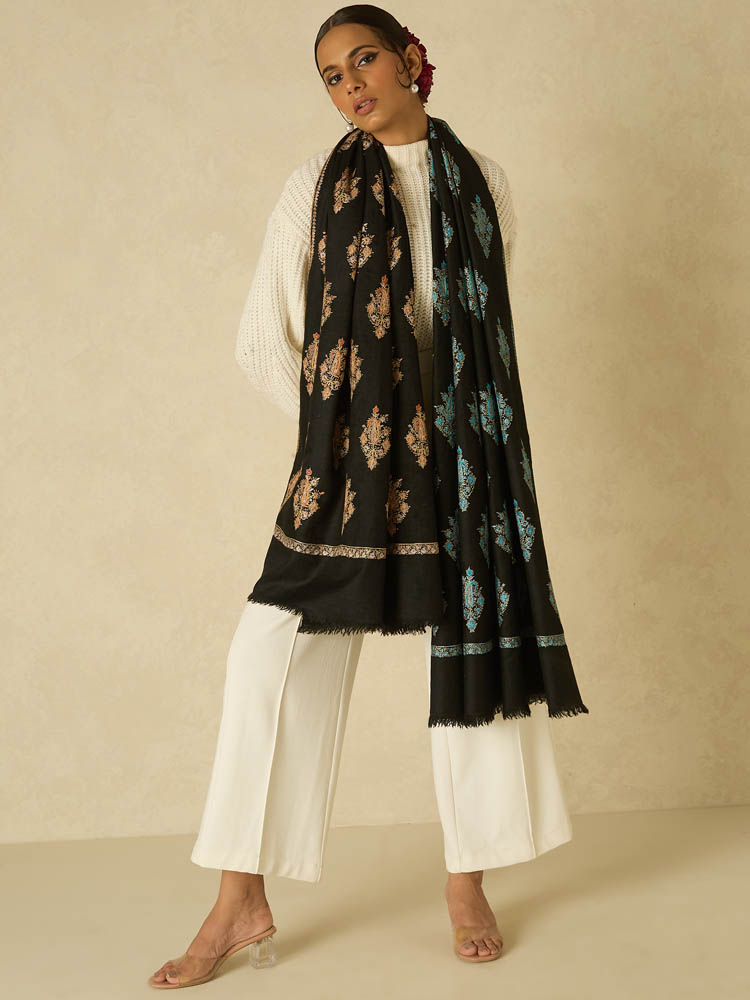
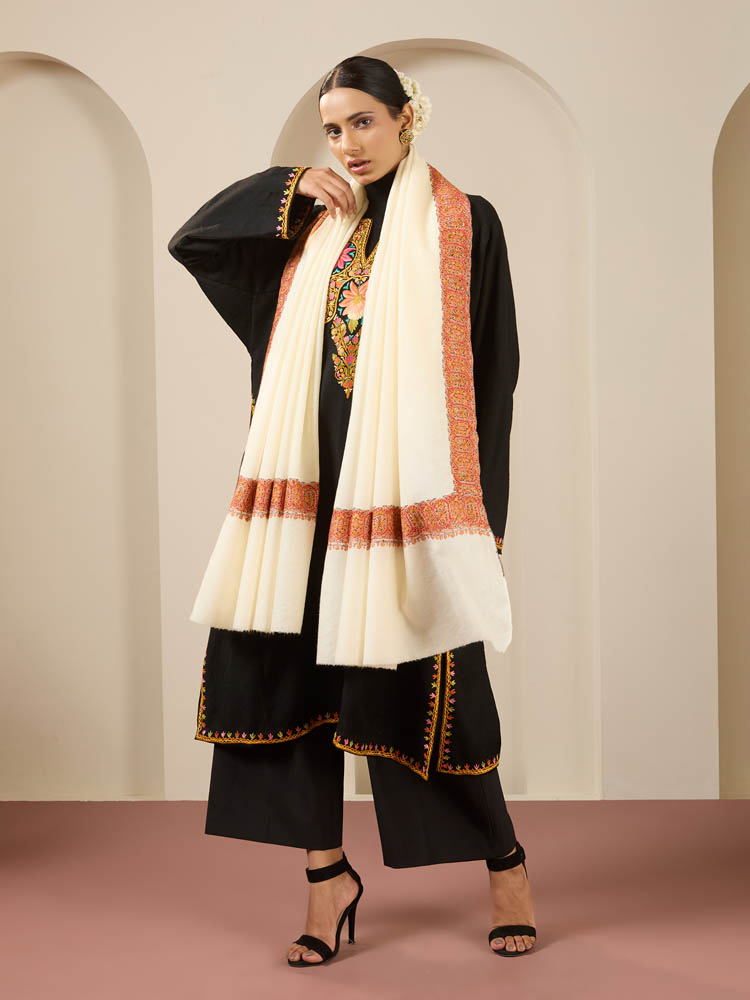
Think of a shawl as an empty canvas. In a Dordaar, the artist chooses to leave the center clean and calm while framing it with embroidery along all four sides.
Some pieces carry slim, delicate borders; others have wider, statement-making frames. Either way, the structure gives the shawl a poised, formal look—perfect for those who appreciate balance and quiet elegance.
Now, remember, shawl making is an art and we have even subsets and types of dordaars. Below should be helpful –
- Topdor – The embroidery border is 3.5” or about 9 cms in height.
- Neemdor – The embroidery border is 2” or about 5 cms in height.
- Chaar Hashia – The embroidery border is 0.75” or about 1.8 cms in height.
- Baledaar/ Baildar – The embroidery border is 0.5” or about 1.2 cms in height.
At the same time, it is important to note that weavers, embroidery, and artisans along with myself do keep experimenting with designs and sizes. You can come across new sizes and patterns which is completely fine! A piece should be to your liking and beautiful to you, that is what matters!

Dorukha
Dorukha simply means “two-sided.” These shawls are reversible, with both sides finished beautifully. It’s the kind of craft that makes you pause for a moment—the weaving/ embroidery is so fine, you can’t instantly tell which side was meant to be front.
A practical luxury, and a marvel of technique.

Doshaala
A Doshaala—a traditional men’s shawl—is large for a reason. In the past, traveling and working men needed a shawl big enough to wrap around their chest twice (do meaning two), keeping them warm in harsh weather. That’s how the name Do-shawl came about.
The shawl in the image reflects that heritage: bold patterns, wide borders, and a generous size meant for real protection. Even today, a Doshaala isn’t just beautiful—it’s practical, rooted in the history of Kashmiri craftsmanship.
Feature: Jashn-e-Doshaala – Kani Weave Mens Shawl – Ivory, Multi

Durbar
The word Durbar brings to mind royal courts, and that’s exactly the feeling this style carries. A Durbar shawl usually features formal, stately motifs—patterns that echo old palaces, carved columns, and classic Mughal aesthetics. It’s the category people reach for when the occasion calls for something regal.
Feature: Raj Durbar Kani Shawl – White Beige

The Art of Coverage and Flow
Jaal / Jaaldar
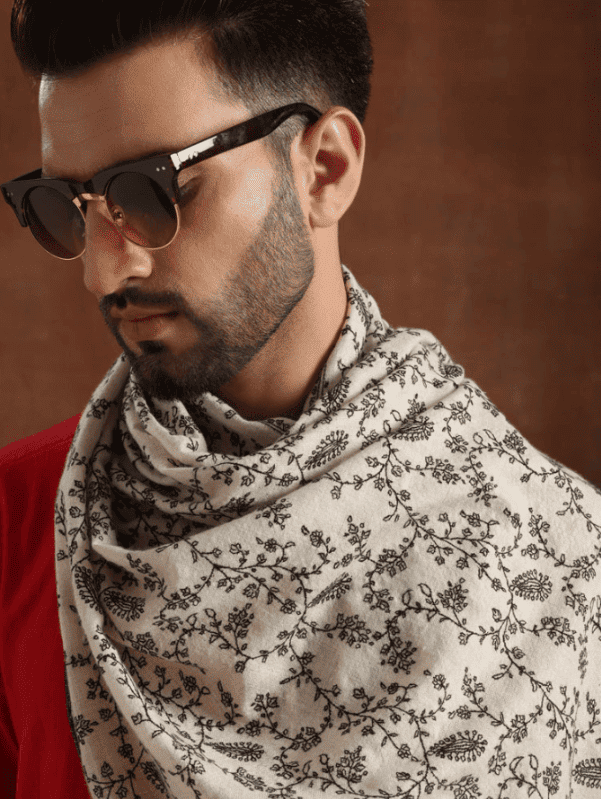
A Jaal is like a garden that has space to breathe. The embroidery runs “all over,” but in an open, airy way. You’ll see vines stretching out, flowers spaced gracefully, and the base color peeking through like morning light between leaves.
Feature: Handloom Pashmina Phool Jaal Pashmina Shawl – Ivory, Black
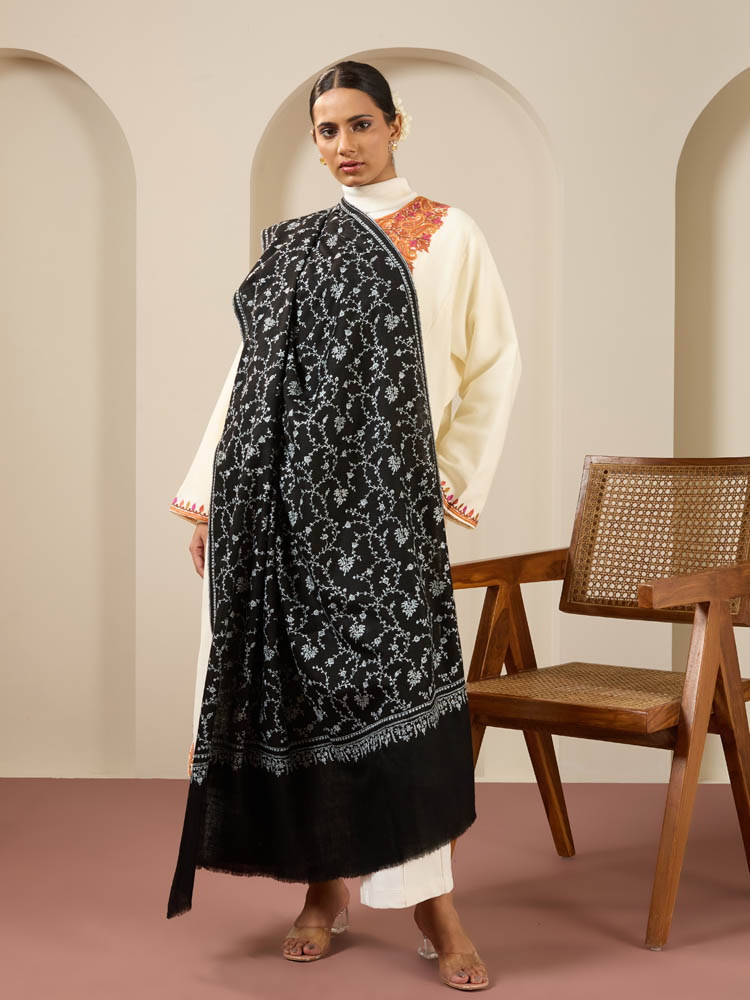
At KCS Kashmir Shawl Emporium, we often show customers Jaaldar pieces when they want embroidery that feels detailed but not heavy—something elegant yet relaxed.
Jama / Jamavar
If Jaal is a garden, Jama is a forest—dense, rich, and wonderfully overwhelming in the best way.
A Jamavar covers the entire surface of the shawl with embroidery so intricate that the base fabric almost disappears beneath it. The motifs—often paisleys, vines, or scrollwork—flow into each other without pause.
This style isn’t tied to one material; it can be wool, pashmina, or blends. What matters is the coverage.

The Craft of Lines, Colors, and Quiet Mastery
Kalamkari
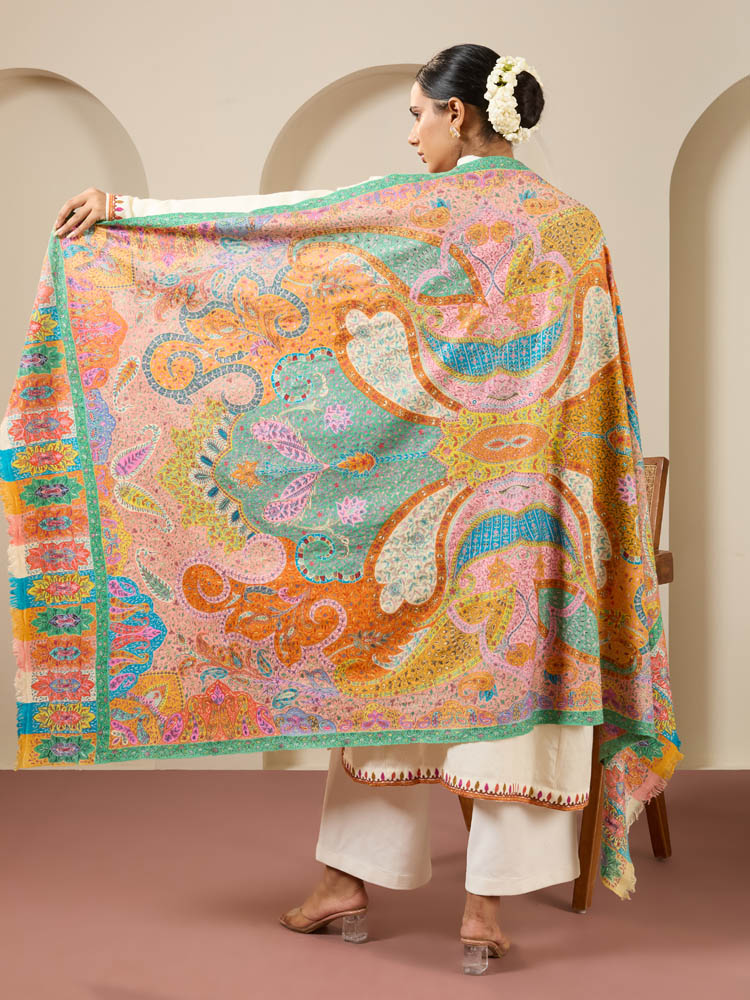
Kalamkari literally means “pen work,” and in shawls it refers to designs first drawn by hand and then brought to life with delicate needlework. The process begins with the artisan sketching flowing vines, petals, or paisleys directly onto the fabric—almost like illustrating a story.
Once the lines settle into place, embroidery fills them in, creating a soft, painterly effect. Kalamkari pieces carry that unmistakable handmade charm: gentle outlines, fine details, and a feeling of art made slowly.
Kani
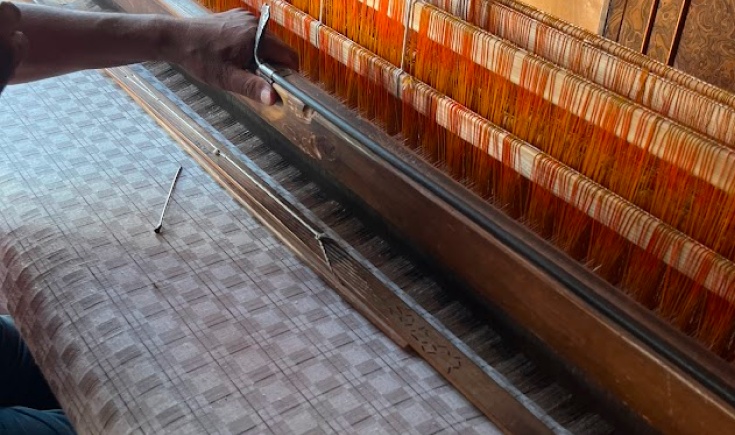
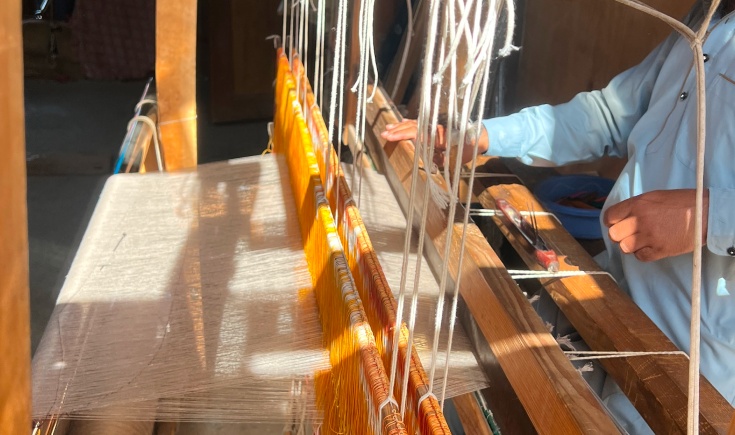
A Kani shawl isn’t embroidered—it’s woven. Tiny wooden sticks, called kanis, act like multiple weft needles. Each stick carries a different color, and together they create the rich, tapestry-style motifs that Kani shawls are famous for.
The effect is seamless: no raised threads, no uneven surfaces—just a smooth, woven picture. Many customers at KCS Kashmir Shawl Emporium are surprised to learn how months of patient weaving go into a single Kani piece.
Feature: Chinardar Kani Shawl with Zari Border – Mustard Honey

Khatraas
Khatraas refers to fine, crisp detailing—usually in motifs that require careful, sharp linework. It’s the sort of finish where you can see precision in every edge. When a shawl is described as having khatraas work, it means the design stands out clearly, almost like ink drawn with a steady hand.

Kuklihut
Kuklihut is a Kashmiri word referring to the natural fawn beige/ melange brown color.
Feature: https://www.kcsshop.in/product/raw-white-handloom-pashmina-stole/
https://www.kcsshop.in/product/chashme-bulbul-handloom-pure-pashmina-mens-shawl-natural-whte/

Lohis
A Lohi is a traditional Kashmiri shawl made for everyday winter use. It’s woven from thick, warm wool, which makes it perfect for protecting against cold weather.
Unlike fancy embroidered shawls, Lohis are simple and practical—usually plain or lightly patterned. They’re bigger in size, very warm, and built to last, which is why people in Kashmir use them daily during winter.
A Lohi is all about comfort, warmth, and tradition—your reliable winter shawl for regular wear.

Palla / Palledaar
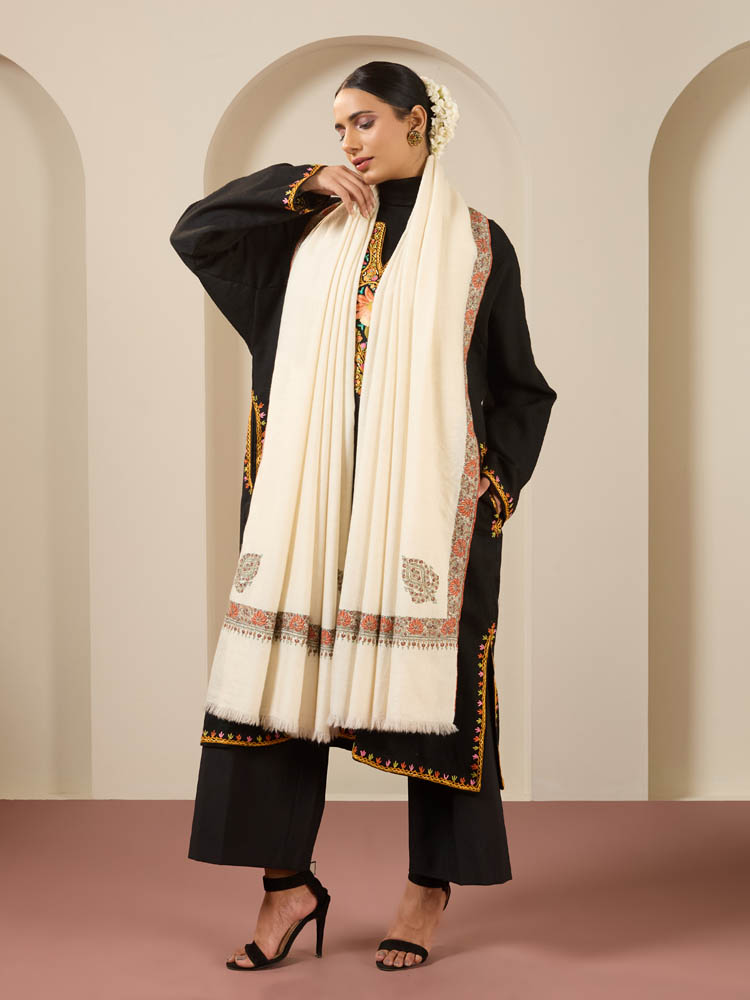
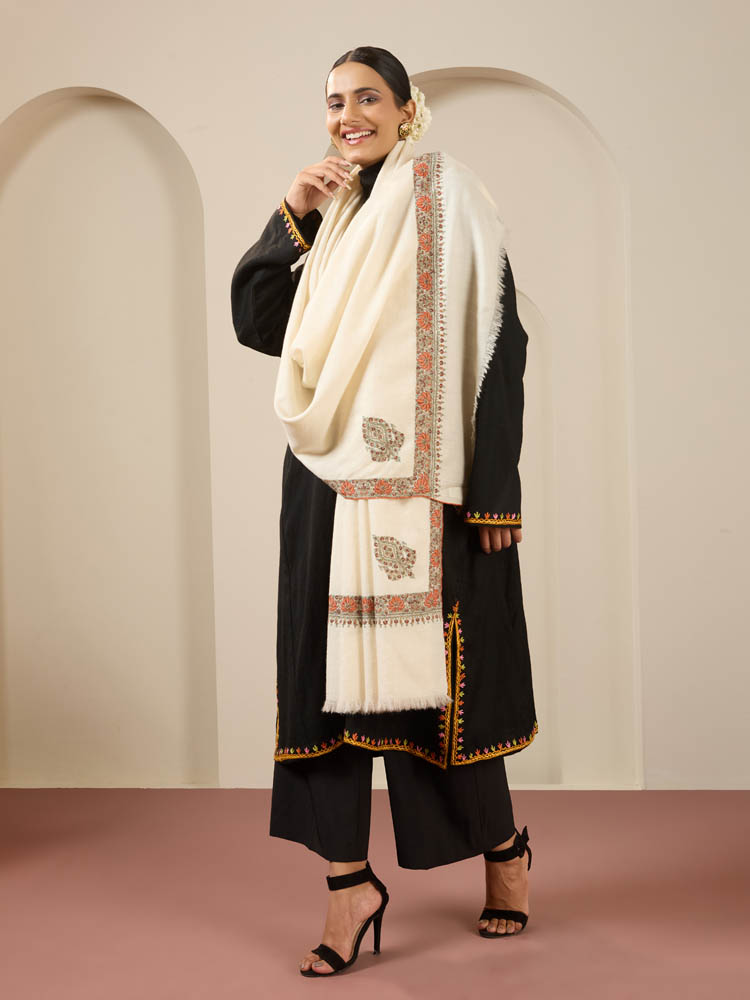
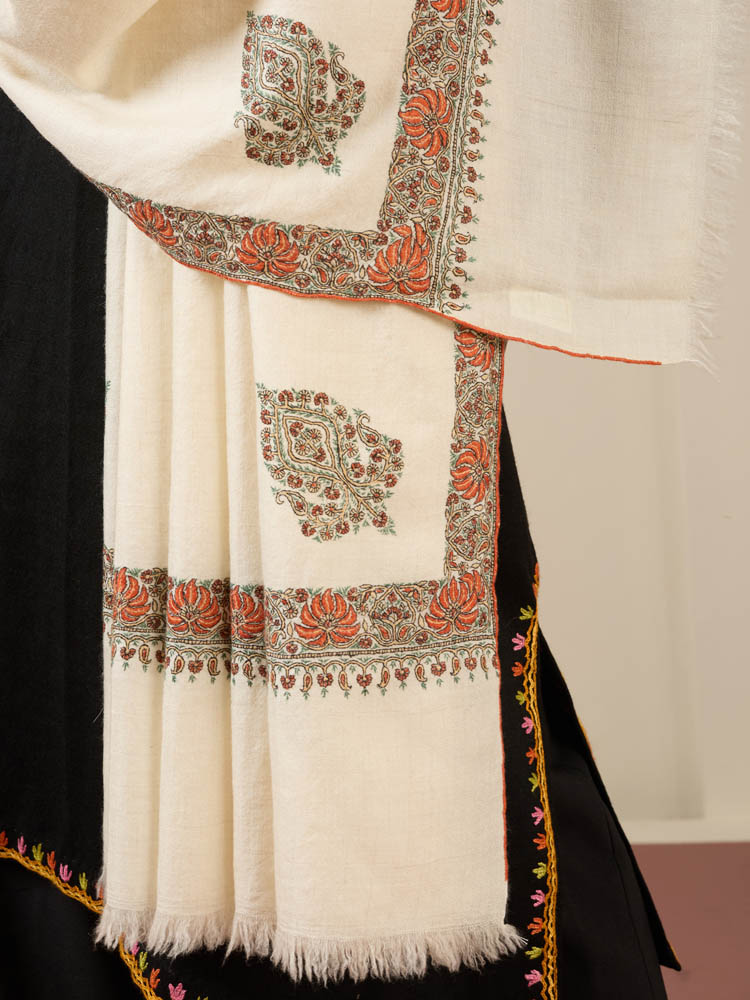
Palla simply means the edge or border of a shawl. In a Palledaar shawl, the embroidery usually decorates just the two shorter sides, giving the piece a delicate frame without covering the entire fabric. It’s elegant and understated—a perfect choice if you like subtle artistry in your everyday wear.

At KCS Kashmir Shawl Emporium, these shawls are favorites for anyone who loves a touch of heritage with effortless style.
Papier Mache
Don’t let the name confuse you—Papier Mache in shawls has nothing to do with paper.
It’s a style of embroidery that creates a slightly raised, three-dimensional effect, almost like the motifs are floating on the fabric.
Running your fingers over it, you can feel the depth and texture of every stitch. These shawls are the kind people stop to admire, even from across a room.

Pashmina
Pashmina is the yarn which comes from the fine underbelly hair of the Changthangi goats in the Himalayas// Ladakh region of India. To protect itself from harsh winters these unique goats grow hair during winters and naturally shed on the arrival of summers. This hair is spun into yarn and then woven/ embroidered into fine “Pashmina Shawls” in Kashmir. Due to its rare supply and its incredible properties of softness and warmth Pashmina is also known as “Soft Gold” and “King of Fabrics”. Pashmina yarns are approximately 12-15 μm microns thin in diameter. For comparison, human hair is 100-200 μm microns in diameter.
Feature: Phool Palla Kani Dorukha Pashmina Shawl – Saffron, Rust
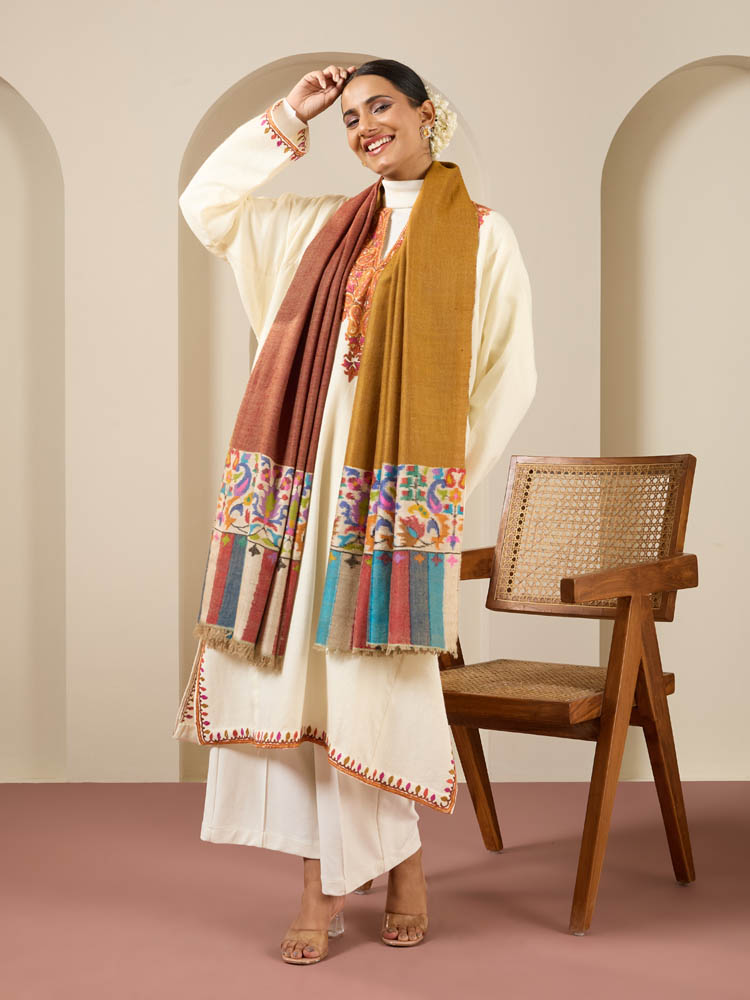
That’s why KCS Kashmir Shawl Emporium has been curating premium Pashmina for customers across India and around the globe since 1950.
Posh / Poshkar
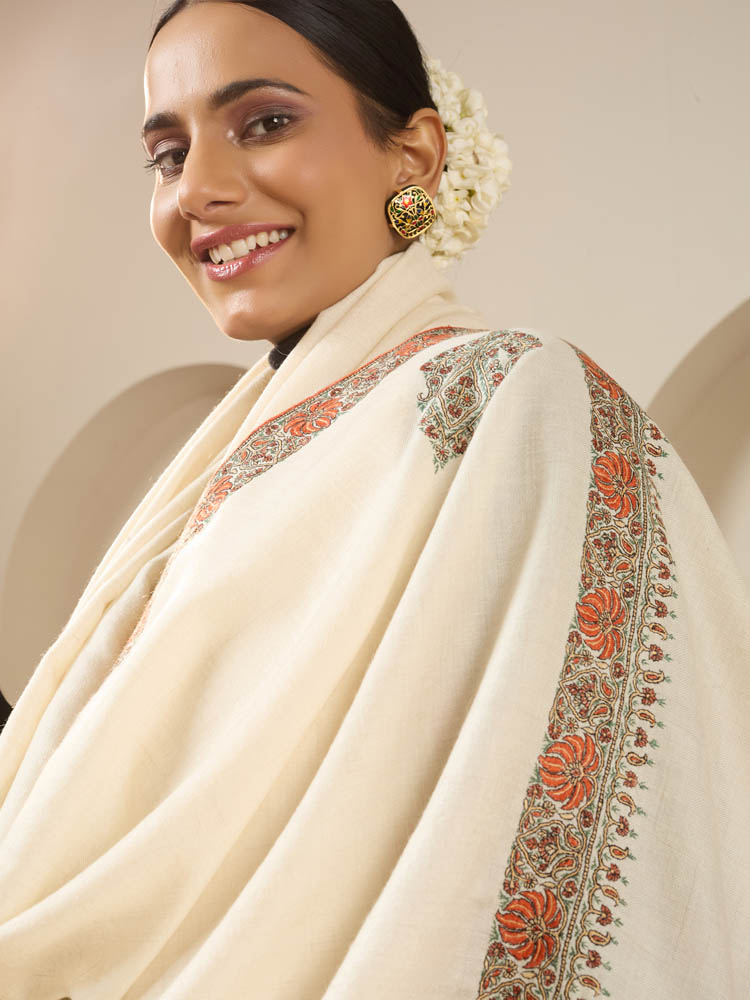
Posh comes from the Kashmiri word which means “flower/ floral motifs”. A shawl with floral details is hence called “Poshkar”.

Subtle Beauty in Color and Craft
Sabz
In Kashmiri, sabz means green—a shade inspired by the valley’s fresh leaves, soft fields, and the calm, natural tones of spring.
Feature: https://www.kcsshop.in/product/jalaal-kani-antique-wool-shawl-sabz-green/

Siya
Siya simply means black. Black shawls are timeless and versatile—they act as a perfect canvas for embroidery, letting every thread pop.
Feature: Pure Wool Ari Embroidery Dordaar Shawl – Midnight Black

Sozni
Sozni is a delicate embroidery technique that makes you lean in closer. Each fine, continuous stitch creates flowers, paisleys, or geometric patterns that almost float on the fabric. It’s a slow, meticulous process, and the result feels soft, light, and magical. Many heirloom-quality shawls at KCS Kashmir Shawl Emporium feature Sozni embroidery, showcasing generations of skill.
Surkh
Surkh means red—but not just any red. It can be bright and lively or deep and rich. Red shawls often pair beautifully with gold or cream embroidery, giving the piece a festive, regal glow.
Feature: Surkh Golbadaam Ari Hand Embroidery

Texture, Technique, and Tradition
Tehreerkar
A Tehreerkar is the artisan who outlines each motif with precision, adding crisp definition to the embroidery. Think of it as the difference between a sketch and a finished painting—suddenly, every detail stands out beautifully.
Tichdaar
Tichdaar shawls feature sharp, pointed motifs—triangles or leaf shapes—scattered across the fabric. The word comes from tich, meaning “point.” It’s a simple, subtle way to add interest to a shawl without it feeling busy.

Shahtoosh
Shahtoosh – meaning “King of Wool” colloquially also referred to as “Toosh” traditionally refers to the ultra-fine wool of the “Chiru” Tibetan antelope — a fibre so light and warm it feels almost weightless. Because producing a Toosh shawl required killing the animal (two deers at least to make one shawl) the animal is now extinct and also protected under Convention on International Trade in Endangered Species (CITES). Producing Shahtoosh shawls is a non-bailable offence with minimum three year imprisonment under the Wildlife (Protection) Act, 1972.
Toosh/ Toosha
Not to be confused or misunderstood with “Shahtoosh” – Toosh or Toosha also refers to the natural fawn beige/ malenge brown color in North India.

Natural Heritage
Zati – Natural
Zati means the wool or fabric is left in its natural color, untouched by dyes. These shawls celebrate simplicity, letting the texture and weave shine on their own. They are timeless pieces for anyone who loves understated elegance and authentic beauty.


![ImageGul Kaar Ari Hand Emb Wool Jacket – Sandstone, Beige [48]](https://d13676iop780hb.cloudfront.net/uploads/2025/12/KCS-1741-MS-877-1.jpg)
![ImageGul Kaar Ari Hand Emb Wool Jacket – Sandstone, Beige [48]](https://d13676iop780hb.cloudfront.net/uploads/2025/12/KCS-1741-MS-877-2.jpg)
![ImageGul Kaar Ari Hand Emb Wool Jacket – Sandstone, Beige [48]](https://d13676iop780hb.cloudfront.net/uploads/2025/12/KCS-1741-MS-877-3.jpg)
![ImageGul Kaar Ari Hand Emb Wool Jacket – Sandstone, Beige [48]](https://d13676iop780hb.cloudfront.net/uploads/2025/12/KCS-1741-MS-877-4.jpg)
![ImageGul Kaar Ari Hand Emb Wool Jacket – Sandstone, Beige [48]](https://d13676iop780hb.cloudfront.net/uploads/2025/12/KCS-1741-MS-877-5.jpg)


